



By Julia Talbot-Jones, Senior Lecturer | School of Government, Te Herenga Waka — Victoria University of Wellington
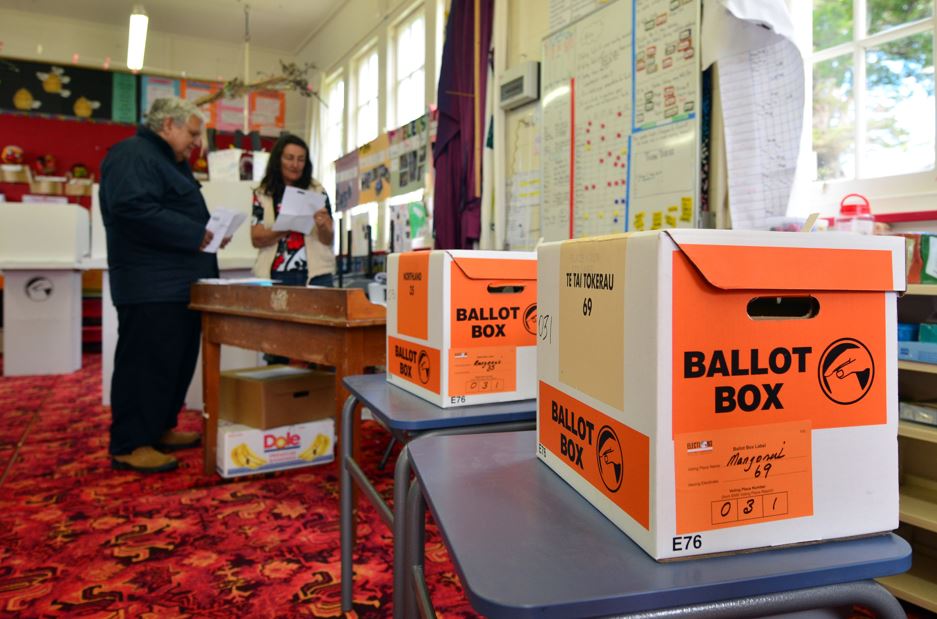
By now you should have received those familiar orange envelopes containing your local body election papers. Have you opened them? Will you vote? And will you remember to post them back?
These are important questions now that voting has opened. The results of these elections, which happen every three years, will shape how New Zealanders live, work and travel around the country’s small towns and big cities.
But when voting closes on October 11, concerns about low voter turnout will inevitably resurface. Voting rates have been falling for at least 30 years and voter participation now rests around 40% – roughly half that of general elections.
The implications are significant. City and district councils manage local services, infrastructure and planning, including roads, water, waste, parks, libraries and local regulations. Regional councils oversee water quality, land use, flood control and often public transport and regional parks.
A weak local democracy compromises that system, and affects how elected representatives respond to local needs and plan for the future. The question is, how can we close the voter gap?
Previous suggestions have included paying people to vote, making voting compulsory, using incentives to change voter behaviour (such as giving away “I voted” stickers), and introducing online voting.
Our mission is to share knowledge and inform decisions.
About us
However, a potentially more effective strategy could be syncing local elections with general elections. This would come with certain risks, but evidence suggests it is the most effective strategy for boosting voter turnout.
The crisis of civic engagement
The challenge facing local democracy in Aotearoa New Zealand is not unique. Internationally, voter turnout in local elections is falling and is consistently below the levels observed at general elections.
In the US, local election turnout is often less than 20%, despite presidential elections seeing an average turnout of around 60%. In the UK, voter turnout for local elections is around half the general election rate.
Even in Australia, where voting in local elections is compulsory in most states and territories, only around 60% of enrolled voters voted in the recent Northern Territory local government elections. In some parts of the territory, voter turnout was as low as 10%.
This all has significant implications for representative decision making. Voters who do turn out for local elections are often demographically unrepresentative of the electorate as a whole.
They tend to be more affluent and have higher education levels than non-voters, and are more likely to be working full-time. Voters are also consistently older than non-voters, with over 65s being the most overrepresented group.
Although it’s difficult to measure, these sociodemographic factors likely correlate with differences in issue preferences. In some cases, this can lead to the election of local councillors who prioritise issues that may not be representative of the preferences and needs of the electorate overall.
In smaller elections, there is also a risk of “policy capture” – the undue influence of vested interests on public decision making – leading to outcomes not in the best interests of most constituents.
Closing the voter gap
There is growing evidence that syncing local elections with state or general elections through structural reform is one way to increase voter turnout and improve local democracy.
In California, for example, synced local elections have produced turnout rates dramatically higher than un-synced elections, and local elections held concurrently with national elections have more than double the rate of voter turnout.
Syncing elections could also reduce the risk of “voter fatigue”, which was an undeniable factor affecting voter engagement in recent state elections in Tasmania.
Given this, Aotearoa New Zealand could consider structural reform as a strategy to boost local democracy and voter engagement. Local and general election cycles could be synced by a one-off, one year extension of the local body electoral term to align it with the general election cycle.
Alternatively, the debate about whether to extend the parliamentary term to four years might be expanded to also consider the syncing of local and general elections.
Risk and reform
Structural reform to increase democratic engagement would not be without risks. A four-year parliamentary term is already controversial, due to fears it could consolidate power in the executive without adequate adequate checks and balances.
Likewise, there is a risk that holding local and general elections concurrently could overwhelm and turn off some voters, or make them focus on one set of issues at the expense of others.
Information overload might mean some voters are less informed about candidates or issues. “Ballot fatigue” could see voters skipping options on their voting papers.
But the emerging evidence is pretty persuasive: shifting to concurrent elections has the greatest impact on local government voter turnout relative to any other reform measure (outside of making voting compulsory).
When the subject of plummeting voter turnout inevitably reemerges next month, debating the merits and limitations of deeper structural reform across electoral cycles might be timely.
Disclosure statement
Julia Talbot-Jones is a Research Affiliate at the Bennett Institute for Public Policy at the University of Cambridge and at Motu Economic and Public Policy Research.

Chinese New Zealanders opinion poll for the 2023 General Election. Photo: Trace
In an interview with the Asia Media Centre, Dr Andrew Zhu, director of Trace, conveyed that the economic-focused approach of the National and ACT parties aligns with the priorities and sentiments of Chinese New Zealander voters.
“ACT and National, together, are pretty conservative but economic driven – best reflecting the current situation of Chinese migrants because the cost of living is their biggest struggle, and what they want is economic recovery and tax relief, and those policies been matching with what the Chinese New Zealanders want,” Zhu said.
He added, “Lots of Chinese migrants came here looking for a demographic life, economic freedom of practicing business, and the National seems like the one that aligns with their values better and they have been consistently engaging with local Chinese communities other than any other political parties. While you can see ACT has been successful in reengaging with the Chinese as well. Back in the 1990s, the first Chinese MP was actually from ACT.”
The survey also shown that the rising cost of living in Aotearoa is the primary motivator for Chinese New Zealanders to exercise their right to vote.
Aside from inflation, their top five concerns include crime prevention and law enforcement, job creation, taxation and equity, and access to high-quality public healthcare.
Dr Zhu reinforced that these concerns changed in comparison to the 2020 election, “In the last poll, comparing it to the previous one, the racial discrimination and racial equality was used to be one of the key concerns during COVID, but now it has dropped out of the top five – taxation policy replaced its position. So, whichever party can help them to rebuild economy, rebuild confidence – that’s the party they want to vote for.”
Choice for PM post
Many Chinese New Zealanders back Christopher Luxon for the role of the next prime minister, yet a significant 43.3% are skeptical about a coalition with Winston Peters of New Zealand First.
However, a deeper look into the survey reveals a split within the ethnic Chinese communities regarding Peters. Specifically, 24.1% think Luxon should collaborate with Peters, while 32.6% remain uncertain.
Winston Peters, the leader of NZ First, is well-known for his past statements against immigrants. However, his recent comments about the Chinese community might explain their reconsideration. In a recent public gathering in Nelson, Peters stated that Māori people are “not indigenous” and suggested that their DNA traces back to China 5000 years ago.
Dr Zhu emphasised that the polled Chinese community encompasses more than just those from mainland China, therefore, “When Winston Peters previously asserted that Māori people originated from Taiwan, this resonated with the Taiwanese, leading to claims of Māori having Chinese ancestry.”
Furthermore, he added that interactions at debates or public events hosted by Peters reveal a changing perspective. Dr Zhu notes, “Those I’ve spoken to who’ve attended these events showcase a shift in their attitude towards him. Peters possesses a charm that captures the audience’s attention.”

Dr Andrew Zhu, founder and director of Trace. Photo: AMC
On other issues related to election, the survey also indicated that while the ethnic Chinese community supports term extension from three to four years, they oppose reducing the voting age from 18 to 16.
Significance of ethnic Chinese votes
According to the 2018 census, ethnic Chinese constitute five percent of New Zealand’s population, making them the predominant migrant group. They are followed by Indians and then Filipinos in terms of population size.
Trace, which has been polling for three consecutive elections, aims to capture and quantify the opinions of Chinese New Zealanders. Their findings suggest that this group actively participates in voting.
However, a significant 69% of ethnic Chinese New Zealanders feel that their community’s representation in the country’s politics is not adequately valued or recognised.
Nonetheless, the ethnic Chinese in New Zealand remain optimistic about the power of their vote. They hope that the forthcoming election might herald a transformative period, not just for their community but also for the broader Asian demographic in Aotearoa.
Check full Trace research here.
-Asia Media Centre